Rue Eau de Robec
About Rue Eau de Robec
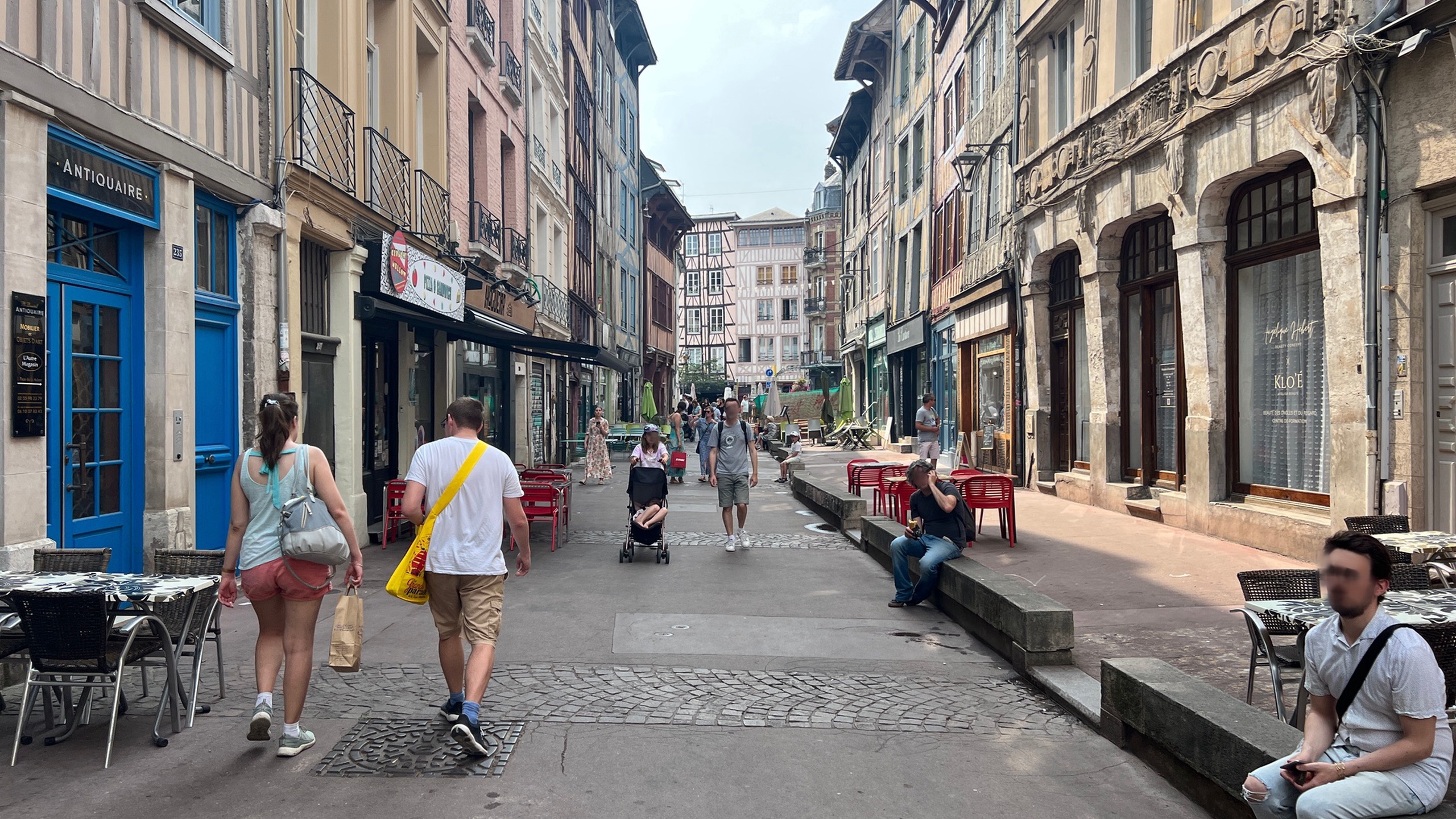
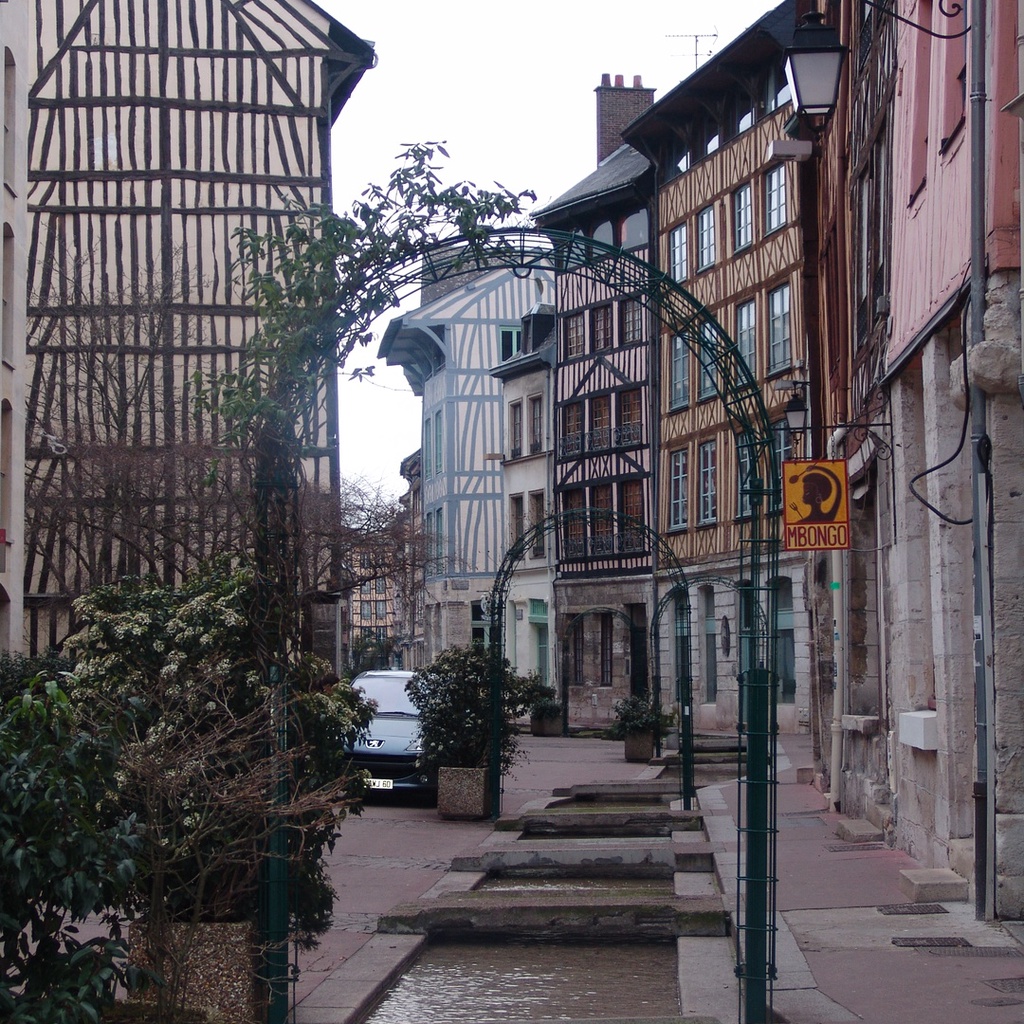
Rue Eau de Robec is one of Rouen's most picturesque and charming streets, featuring beautifully preserved half-timbered houses from the 15th-18th centuries lining an artificial stream. Once the heart of Rouen's textile industry, the street was home to dyers and weavers who used the Robec River to power their mills and wash their fabrics, turning the water different colors daily. Writer Gustave Flaubert immortalized this colorful history in his novel Madame Bovary, describing it as 'a wretched little Venice' with waters that changed from yellow to violet to blue. Today the fully pedestrianized street offers a romantic atmosphere with small footbridges crossing the recreated stream, while the Maison des Quatre Fils Aymon (c. 1475) stands as one of the finest examples of Norman timber-frame architecture. The street is lined with restaurants, cafes, and artisan boutiques, making it perfect for a leisurely stroll. Recently voted Rouen's most beautiful street, it connects to major landmarks including Saint-Ouen Abbey and Saint-Maclou Church, and is free to explore at any time.
Interesting Facts
The Robec River once changed colors daily - yellow, violet, blue, or red - depending on which dyes the textile workers were using that day. The constant pollution from madder (red dye) and woad (blue dye) was so notorious that writer Gustave Flaubert immortalized it in his 1856 novel Madame Bovary, describing the street as 'a wretched little Venice' with its ever-changing colored waters.
The visible stream flowing through the street today is entirely artificial - a closed-circuit water system recreated in the 1970s to preserve the historic charm. The real Robec River was actually buried underground between 1938-1941 due to severe pollution from centuries of textile industry waste, and still flows beneath the street to this day.
The Maison des Quatre Fils Aymon, built around 1475, has had a remarkable transformation from noble residence to disreputable tavern to national museum. In the 19th century, it earned the ironic nickname 'Marriage Hall' as a low-price lodging house. The abandoned building was saved from demolition in 1960, completely restored, and now houses the National Museum of Education (MUNAE).
At its industrial peak, approximately 40 textile factories operated along the 10-kilometer course of the Robec River, with 16 water mills grinding dye plants and wheat. The pollution was so severe that it completely destroyed the river's biodiversity - the waterway that once teemed with crayfish, carp, trout, and tench became lifeless by the late 1800s.
Planning Your Visit
Opening Hours
Location & Practical Info
Address
Rue Eau de Robec, 76000 Rouen, France
Day Routes
Explore all day routesThese carefully curated day itineraries include this attraction and show you exactly how to plan your visit, including transport, timing, and what else to see nearby.
Want to visit this attraction? These routes show you how to get here and what to combine it with.
Best of medieval Rouen
Rouen
Best of medieval Rouen
Rouen
Medieval Rouen walking tour
Rouen
Multi-day Itineraries
View complete itinerariesPlanning a longer trip? These multi-day itineraries incorporate this attraction into complete travel experiences with accommodation, transport, and daily schedules.
This attraction is featured in comprehensive multi-day trips with full logistics included.
Entire Normandy in 12 days
Caen → Bayeux → Granville → ...
Complete Seine-Maritime in 18 days
Dieppe → Le Treport → Rouen → ...
Weekend in Rouen
Rouen