Gros-Horloge
About Gros-Horloge
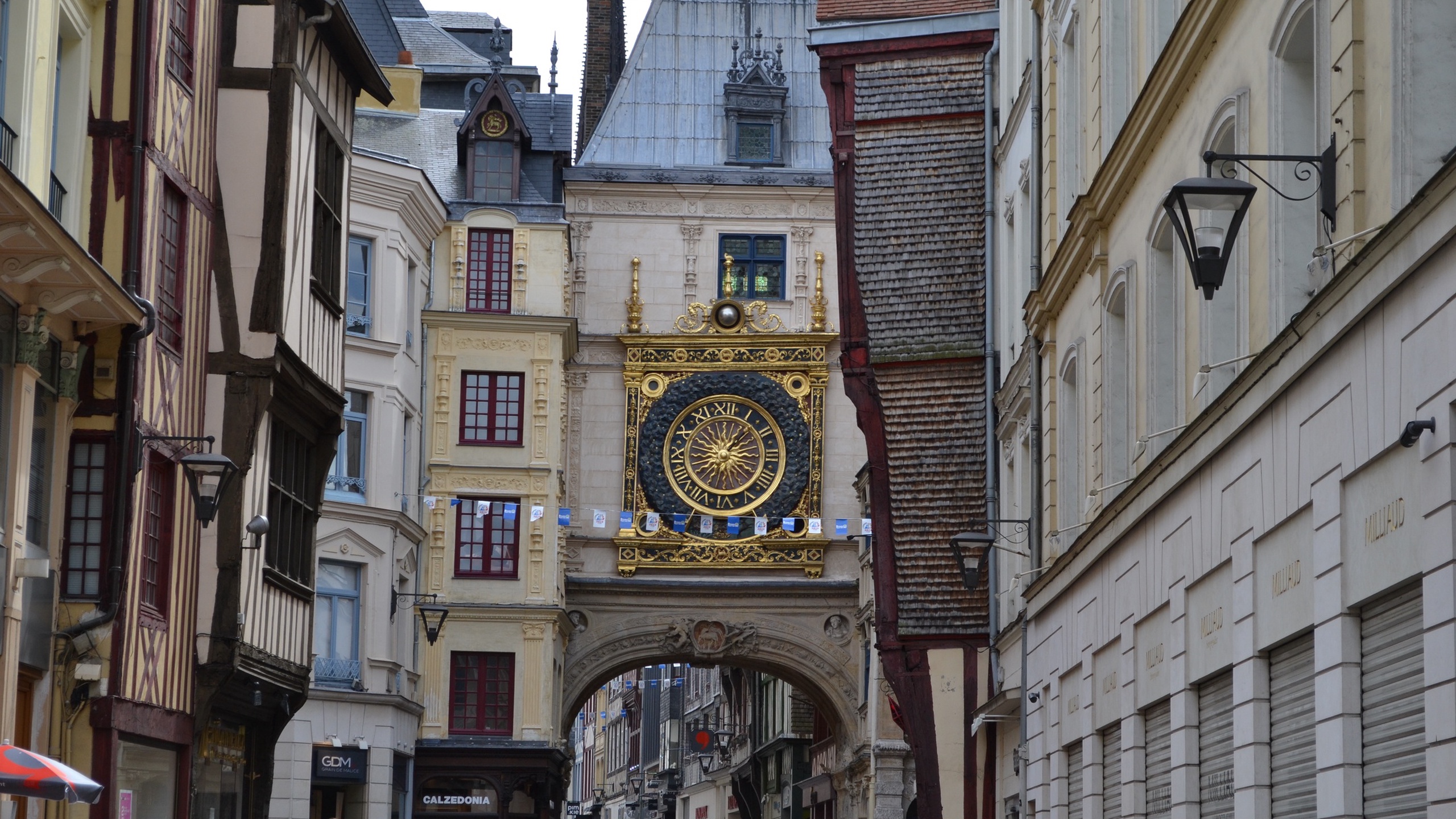
The Gros-Horloge is a stunning architectural ensemble spanning the main pedestrian street of Rouen, featuring one of the oldest working clock mechanisms in France dating from 1389. This Renaissance masterpiece consists of a 14th-century Gothic belfry, an ornate arch with a magnificent astronomical clock installed in 1527, and an elegant 18th-century fountain at its base. The elaborate dial displays a single hand topped with a golden lamb, a radiant sun against a starry blue background, and rotating figures of Roman gods representing each day of the week. Visitors can climb the tower to explore the original medieval mechanism, view the historic bells, tour the former apartments of the 'Governor of the Clock,' and enjoy panoramic views of Rouen from approximately 40 meters high. The Gros-Horloge famously inspired London's Big Ben when architect Augustus Pugin visited Rouen two years before designing the iconic British landmark. An audioguide in 8 languages enhances the 35-40 minute visit, with a special children's version themed on Alice in Wonderland. Note that low season hours (October-March) are reduced, with the monument closed on Mondays and Wednesdays.
Interesting Facts
The clock mechanism was manufactured in 1389, making it one of the oldest surviving clock mechanisms in France and approximately twice the size of the famous Wells Cathedral clock in England. This remarkable piece of medieval engineering functioned mechanically for over 500 years until the 1920s, when it was electrified while preserving the original mechanism in perfect working condition.
The Gros-Horloge served as direct inspiration for London's iconic Big Ben. Architect Augustus Pugin visited Rouen just two years before designing the British landmark, and the influence of the French astronomical clock's ornate Gothic styling is clearly visible in his famous creation.
After the Harelle revolt of 1382, Rouen citizens were forbidden from building a new belfry as punishment. They cleverly circumvented this royal ban by constructing a 'clock tower' instead in 1398, which functionally served as their municipal belfry - a remarkable example of medieval civil disobedience through architectural semantics.
The elaborate Renaissance dial features a unique astronomical display: seven Roman gods appear on triumphal chariots at noon, each representing a day of the week - Luna for Monday, Mars for Tuesday, Mercury for Wednesday, Jupiter for Thursday, Venus for Friday, Saturn for Saturday, and Apollo (the Sun) for Sunday. A 30cm sphere shows moon phases, completing a full rotation every 29 days.
Planning Your Visit
Opening Hours
Ticket Prices
General Admission
RecommendedLocation & Practical Info
Address
27 rue Victor-Hugo, 76000 Rouen, France
Day Routes
Explore all day routesThese carefully curated day itineraries include this attraction and show you exactly how to plan your visit, including transport, timing, and what else to see nearby.
Want to visit this attraction? These routes show you how to get here and what to combine it with.