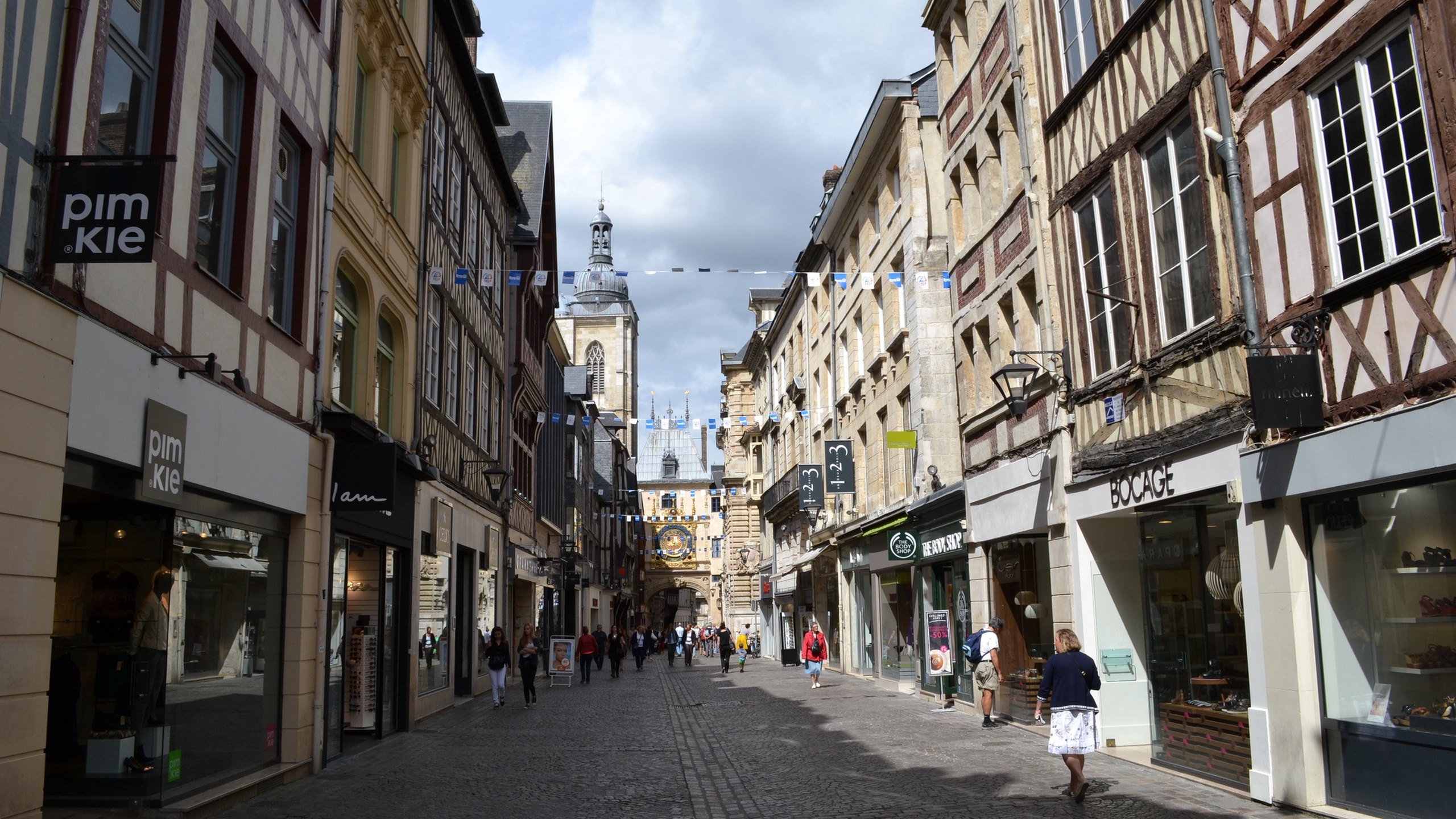
Gros-Horloge Street (Rue du Gros-Horloge)
About Gros-Horloge Street (Rue du Gros-Horloge)
Rue du Gros-Horloge is one of France's most picturesque historic pedestrian streets, stretching approximately 300 meters through the heart of medieval Rouen. This ancient thoroughfare, possibly dating back to the Roman era as part of the city's decumanus, connects two of Rouen's most significant landmarks: Place du Vieux-Marché, where Joan of Arc was burned at the stake in 1431, and the magnificent Notre-Dame Cathedral with France's tallest spire. The street made history in 1971-1972 when it became the first pedestrian-only street in France, a revolutionary urban planning experiment that increased foot traffic by 50%. Visitors are treated to a stunning display of Norman half-timbered architecture, with some buildings possibly predating Joan of Arc's execution. The centerpiece is the famous 14th-century Gros-Horloge astronomical clock, one of Europe's oldest working mechanisms, displayed in a Renaissance arch spanning the street. The cobblestone street comes alive during the Christmas season with spectacular overhead illuminations and a festive market atmosphere.
Interesting Facts
Rue du Gros-Horloge made history in 1971-1972 when it became France's first pedestrian-only street. Local merchants initially protested fiercely, fearing loss of business, but the experiment proved remarkably successful - foot traffic increased by 50% within a few years, and the model inspired pedestrianization movements across France and Europe.
The street may be over 2,000 years old, possibly situated on the axis of the ancient Roman city's decumanus (main east-west street). Throughout history, it has been known by various names including 'Grande-Rue,' 'rue Courvoiserie,' 'rue Massacre,' and 'rue Vanterie' before reverting to 'Grande-Rue' during the French Revolution.
Three timber-framed buildings on this street may have witnessed Joan of Arc's trial and execution in 1431. These structures could predate her burning at Place du Vieux-Marché, making them among the oldest buildings in Rouen and silent witnesses to one of history's most famous martyrdoms.
Impressionist master Camille Pissarro was so captivated by this street that he created a masterful etching series of it in 1883-1884. His 'Rue du Gros-Horloge, à Rouen' is considered one of his finest prints, showcasing the street's atmospheric charm that continues to enchant visitors today.
In 1932, France's first Monoprix department store opened on this very street under the name 'Noma' (a contraction of 'nouveau magasin' meaning 'new store'). This marked the beginning of a retail revolution that would eventually spread throughout France, and the street remains a vibrant shopping destination today.
Planning Your Visit
Opening Hours
Location & Practical Info
Address
Rue du Gros-Horloge, 76000 Rouen, France
Day Routes
Explore all day routesThese carefully curated day itineraries include this attraction and show you exactly how to plan your visit, including transport, timing, and what else to see nearby.
Want to visit this attraction? These routes show you how to get here and what to combine it with.
Best of medieval Rouen
Rouen
Best of medieval Rouen
Rouen
Medieval Rouen walking tour
Rouen
Multi-day Itineraries
View complete itinerariesPlanning a longer trip? These multi-day itineraries incorporate this attraction into complete travel experiences with accommodation, transport, and daily schedules.
This attraction is featured in comprehensive multi-day trips with full logistics included.
Entire Normandy in 12 days
Caen → Bayeux → Granville → ...
Complete Seine-Maritime in 18 days
Dieppe → Le Treport → Rouen → ...
Weekend in Rouen
Rouen