Le Havre Beach
About Le Havre Beach
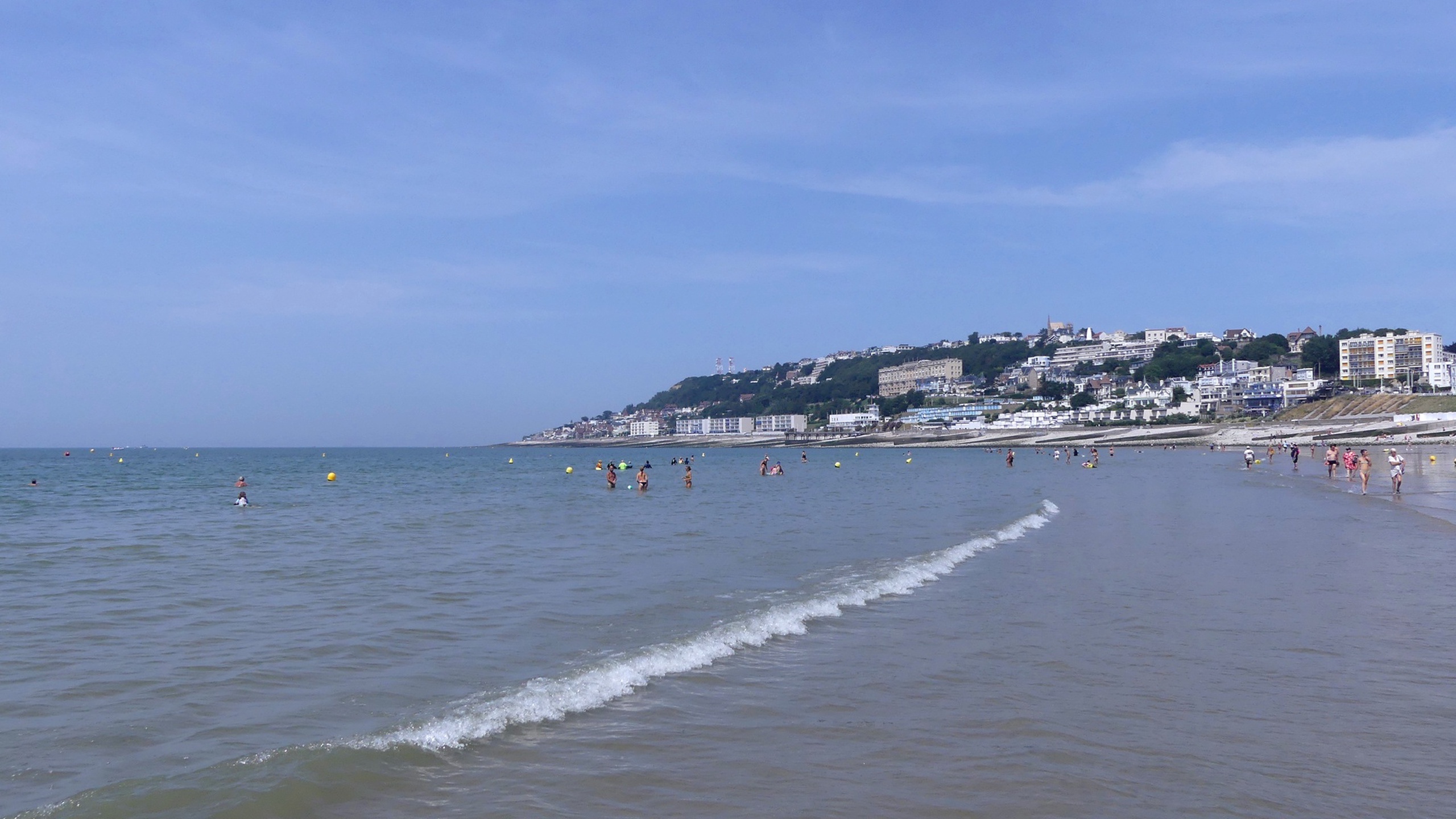
Le Havre Beach is a 2-kilometer pebble beach stretching along the Alabaster Coast, located just 500 meters from the UNESCO World Heritage city center. The beach is part of Auguste Perret's post-WWII reconstruction masterplan that transformed this heavily bombed city into a landmark of modern urban planning. At low tide, a sandy zone appears, and since 2022 a dedicated sand strip has been added for comfort. The beach features France's largest free outdoor skatepark with a 1,200m² bowl, along with beach volleyball courts, children's play areas, and water sports rentals in summer. The iconic white beach cabins, a tradition dating back to 1900, line the shore and once numbered over 2,200 - a European record. Swimming is supervised from July through August, and the beach has held Blue Flag certification for 26 consecutive years, confirming its excellent water quality. The promenade offers stunning views of the reconstructed modernist architecture, including the striking 107-meter tower of Saint Joseph's Church visible across the waterfront.
Interesting Facts
During World War II, the famous Dutch artist Karel Martens painted all 700 beach cabins in vibrant colors between 2017 and 2021 as part of an art installation called 'Couleurs sur la Plage.' However, after the project ended, the cabins were returned to their traditional all-white appearance that has defined the Le Havre shoreline since the early 1900s.
The beach's pebbles have a unique origin - they are not ordinary stones but large grey flint nodules eroded from the chalk cliffs of the Alabaster Coast over thousands of years. These distinctive pebbles, called 'galets' in French, are so characteristic of the region that they've become part of Norman cultural identity and even appear in local art and souvenirs.
Le Havre was the last major Norman city to be liberated in World War II, surrendering on September 12, 1944. The Allied bombing raids on September 5-6, 1944 destroyed 80% of the city center and left 5,000 people dead. Architect Auguste Perret was already 71 years old when he was appointed to rebuild the city, yet he spent the remaining 9 years of his life creating what would become France's first UNESCO-listed modern city.
Planning Your Visit
Opening Hours
Location & Practical Info
Address
Boulevard Albert 1er, 76600 Le Havre, France
Day Routes
Explore all day routesThese carefully curated day itineraries include this attraction and show you exactly how to plan your visit, including transport, timing, and what else to see nearby.
Want to visit this attraction? These routes show you how to get here and what to combine it with.
Multi-day Itineraries
View complete itinerariesPlanning a longer trip? These multi-day itineraries incorporate this attraction into complete travel experiences with accommodation, transport, and daily schedules.
This attraction is featured in comprehensive multi-day trips with full logistics included.