Wheat Hall (Halle au Blé)
About Wheat Hall (Halle au Blé)
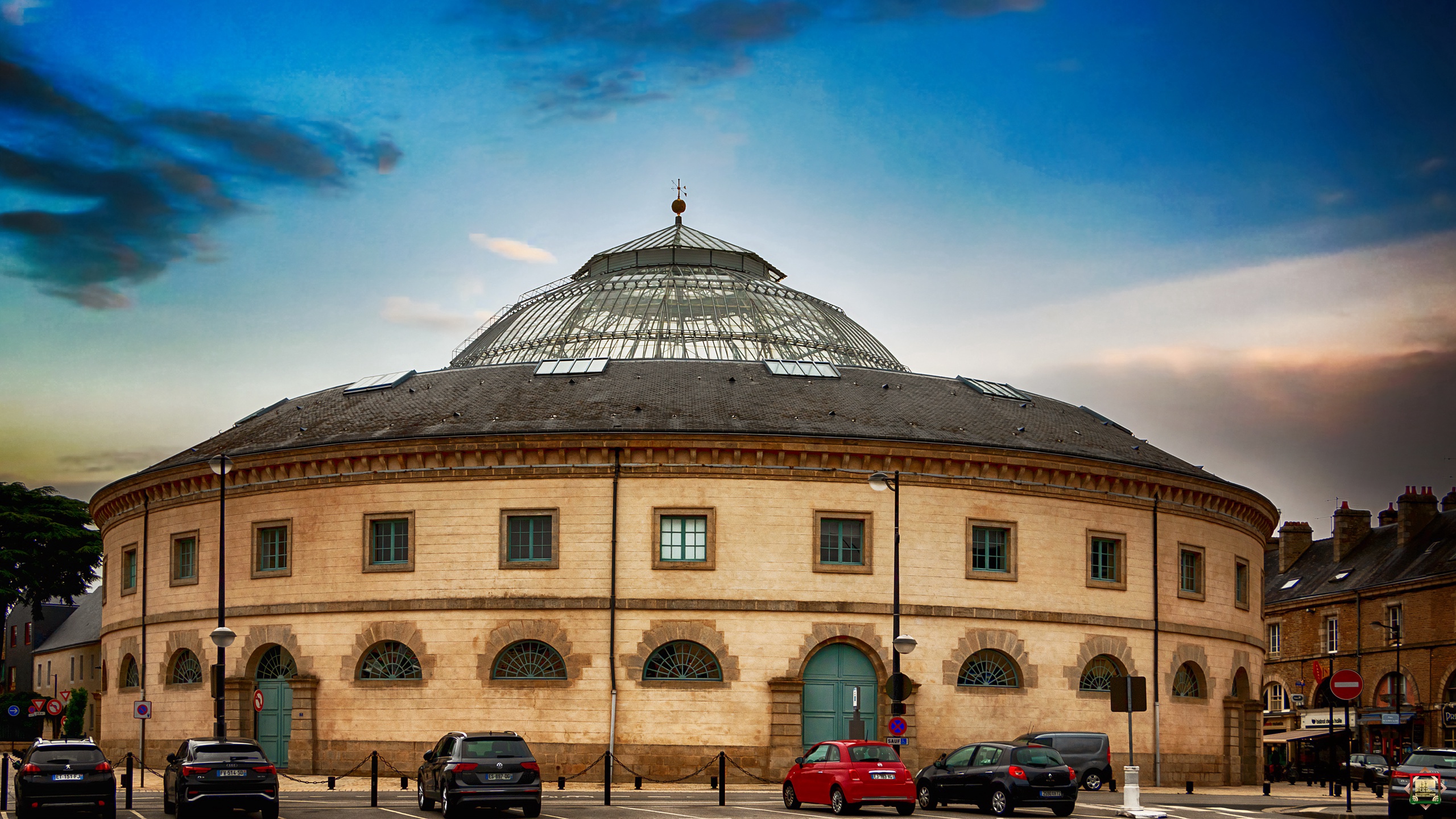
The Halle au Blé is a circular neoclassical building constructed between 1806 and 1812 on the site of a former convent. Originally designed by engineer Joseph Berthélémy for grain trade, the building features a distinctive glass cupola added in 1865. The dome contains 115 glass panes and was built using the riveting technique later employed in the Eiffel Tower's construction. Listed as a Historic Monument since 1975 and fully restored in 2000, the hall now serves as an event venue for exhibitions, markets, and cultural activities. The building also houses a FabLab (digital fabrication laboratory) on its first floor. Visitors can admire the exterior architecture and the glass dome from Place de la Halle au Blé. Interior access is limited to scheduled events and the annual Heritage Days in September.
Interesting Facts
In 1860, the Halle au Blé became the first building in Alençon to be illuminated by gas lighting, marking a significant modernization milestone for the town.
During World War I, the building served as a complementary military hospital (hôpital complémentaire), treating wounded soldiers far from the front lines.
Some historical records suggest that the 1865 glass dome plans may have been drawn by Gustave Eiffel himself, though this connection remains unconfirmed by official sources.
Planning Your Visit
Opening Hours
Location & Practical Info
Address
Place de la Halle au Blé, 61000 Alençon, France
Day Routes
Explore all day routesThese carefully curated day itineraries include this attraction and show you exactly how to plan your visit, including transport, timing, and what else to see nearby.
Want to visit this attraction? These routes show you how to get here and what to combine it with.