Equestrian Statue of William the Conqueror (Statue Équestre de Guillaume-le-Conquérant)
About Equestrian Statue of William the Conqueror (Statue Équestre de Guillaume-le-Conquérant)
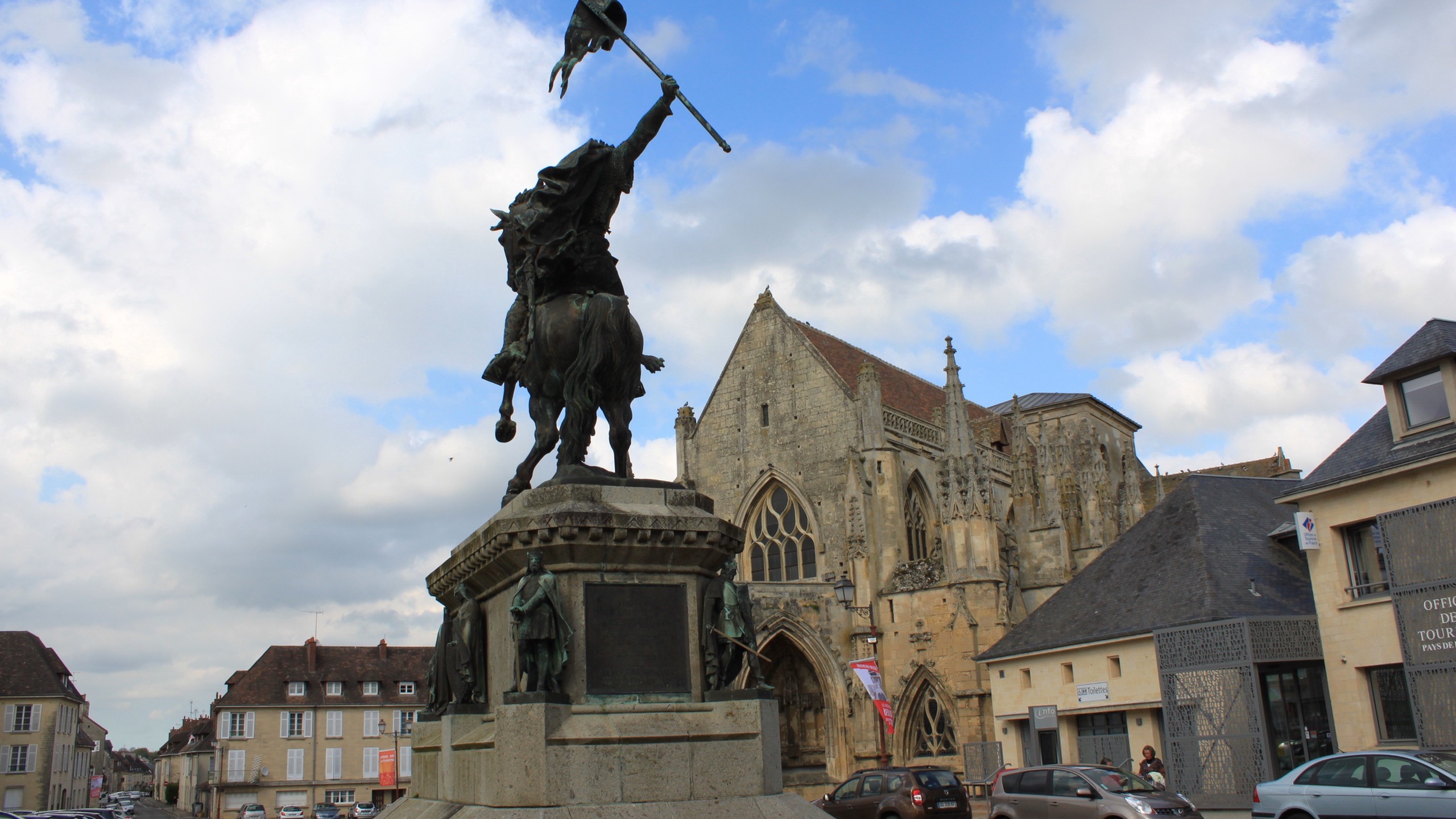
This 7-meter bronze equestrian statue dominates Place Guillaume-le-Conquérant in Falaise, the birthplace of William the Conqueror. Inaugurated on October 26, 1851 before 30,000 spectators, it was created by sculptor Louis Rochet who based his design on the Bayeux Tapestry to ensure historical accuracy. The statue shows William on horseback, holding the papal banner given to him by Pope Alexander II to legitimize his conquest of England in 1066. The granite pedestal features six additional bronze statues of the Dukes of Normandy, added in 1875, representing William's predecessors from Rollo to Robert the Magnificent. The monument was nearly melted down during World War II under the Vichy regime but was removed from the list of bronze statues to be sacrificed. Classified as a Historic Monument in 2024, it stands freely accessible in the town center near the Château de Falaise.
Interesting Facts
The statue was originally planned to be cast in iron, not bronze. It was only thanks to the generosity of Louis-Napoléon Bonaparte (later Napoleon III) and the Duke of Chambord, who contributed during a national fundraising campaign, that the more prestigious and durable bronze material could be used instead.
Sculptor Louis Rochet was not only an artist but also a scholar of Mongolian and Manchu languages. During his last four years of life, he taught 'Tartar languages' at the National Institute of Oriental Languages in Paris and even authored a manual of colloquial Chinese.
Despite what many tourists are told, William the Conqueror was not actually born in the nearby castle. Historical records indicate he was born in the town of Falaise itself, at his mother Arlette's residence. Arlette was the daughter of a local mortician or leather merchant, and William's father Robert I met her while visiting Falaise in 1027.
Planning Your Visit
Opening Hours
Location & Practical Info
Address
3 Place Guillaume le Conquérant, 14700 Falaise, France
Day Routes
Explore all day routesThese carefully curated day itineraries include this attraction and show you exactly how to plan your visit, including transport, timing, and what else to see nearby.
Want to visit this attraction? These routes show you how to get here and what to combine it with.
Multi-day Itineraries
View complete itinerariesPlanning a longer trip? These multi-day itineraries incorporate this attraction into complete travel experiences with accommodation, transport, and daily schedules.
This attraction is featured in comprehensive multi-day trips with full logistics included.