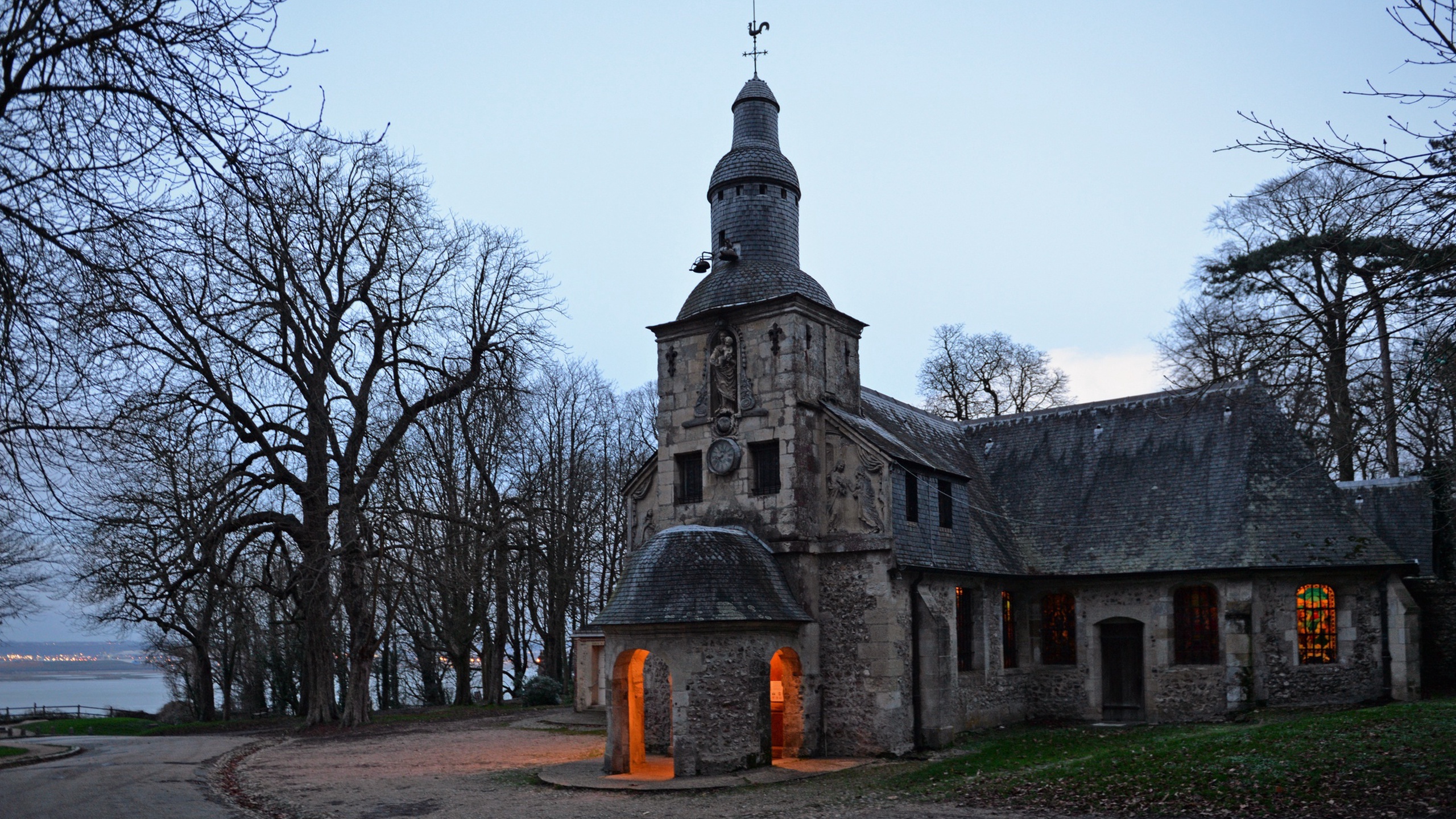
Chapel of Our Lady of Grace (Chapelle Notre-Dame de Grâce)
About Chapel of Our Lady of Grace (Chapelle Notre-Dame de Grâce)
This 17th-century pilgrimage chapel stands on the Plateau de Grâce overlooking Honfleur, built between 1600-1615 by sailors and townspeople on land donated by the Duchess of Montpensier. The site's spiritual significance dates back to 1023 when Duke Richard II of Normandy founded an earlier chapel here after surviving a storm at sea. The interior houses one of France's most impressive collections of maritime ex-votos, including ship models suspended from the vaulted ceiling, marble plaques, and paintings from grateful sailors. A Black Virgin statue remains the focus of devotion for pilgrims. From the esplanade, visitors enjoy panoramic views of the Seine estuary, Le Havre, and the Normandy Bridge. The chapel's carillon of 23 bells plays an Ave Maria composed by Louis-Alfred Lefébure-Wély daily at 4 PM and every quarter hour. Samuel de Champlain, founder of Quebec, prayed here before his voyages to New France. Currently undergoing restoration (2025-2027) but remains open to visitors.
Interesting Facts
In 1538, the original chapel was destroyed when the cliff it stood on collapsed into the sea. According to local legend, only the altar dedicated to the Virgin Mary remained standing amid the rubble, which was seen as a miracle and attracted even more pilgrims to the site.
During the French Revolution in 1793, the chapel was sold as national property and briefly converted into a tavern. Local residents launched a petition to save it from destruction, and the municipality of Honfleur purchased the building to preserve it for future generations.
Claude Monet painted this chapel in 1864 alongside his mentors Eugène Boudin and Johan Barthold Jongkind. This visit to the Normandy coast was formative for Monet and contributed to the development of Impressionism as an artistic movement.
Planning Your Visit
Opening Hours
Location & Practical Info
Address
Côte de Grâce, 14600 Équemauville, France